
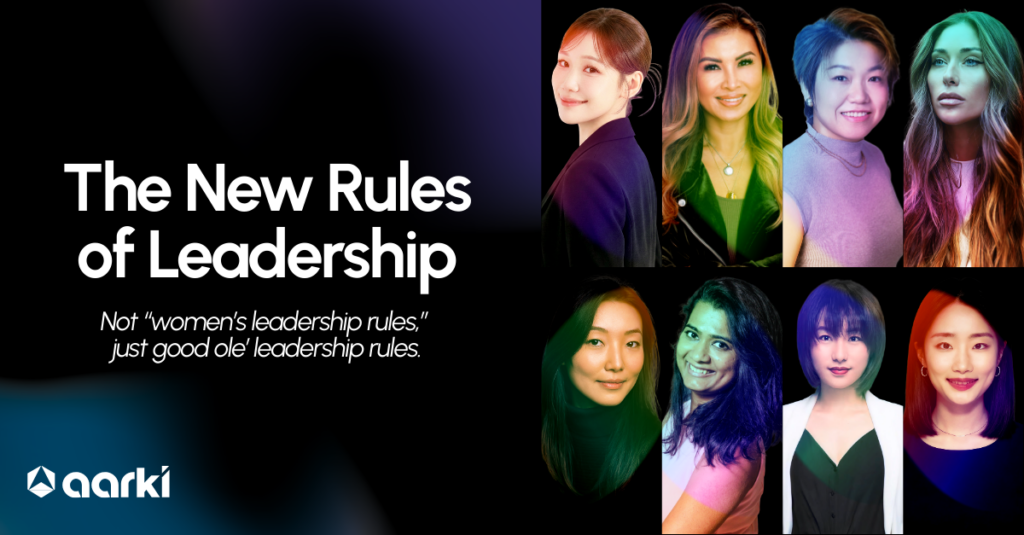
Every year on March 8, the tech industry erupts with a wave of celebratory lists, naming honorees and compiling inspirational quotes. There’s a parade of LinkedIn posts that all begin with “As a woman in tech…”
Given the historical lack of gender parity in tech (if not, across most industries) these celebrations matter. But, so too, does a redefining of a conversation that has become all too accustomed to framing “good leadership” as a women’s topic, rather than just a smart business topic.
The way industries talk about women in leadership doesn’t just shape culture, it becomes data. And that data has consequences. According to Stanford University’s 2025 Artificial Intelligence Index Report, large language models disproportionately “associate women with humanities instead of STEM fields, and favor men for leadership roles, reinforcing racial and gender biases in decision-making.” In other words: even the AI is learning to overlook women in leadership. Which means the cost of not changing this conversation is compounding.
At Aarki, 42% of our management team are women — nearly four times the industry average for executive roles in tech, which sits at just 11% (Forbes). Across offices in San Francisco, New York, London, Bangalore, Beijing, Manila, and Seoul, we asked 14 of them for their leadership playbook. The anecdotes and advice that emerged, did so independently of each other, across different functions, office locations, and seniority levels. What emerged from the data were five patterns or “rules.”
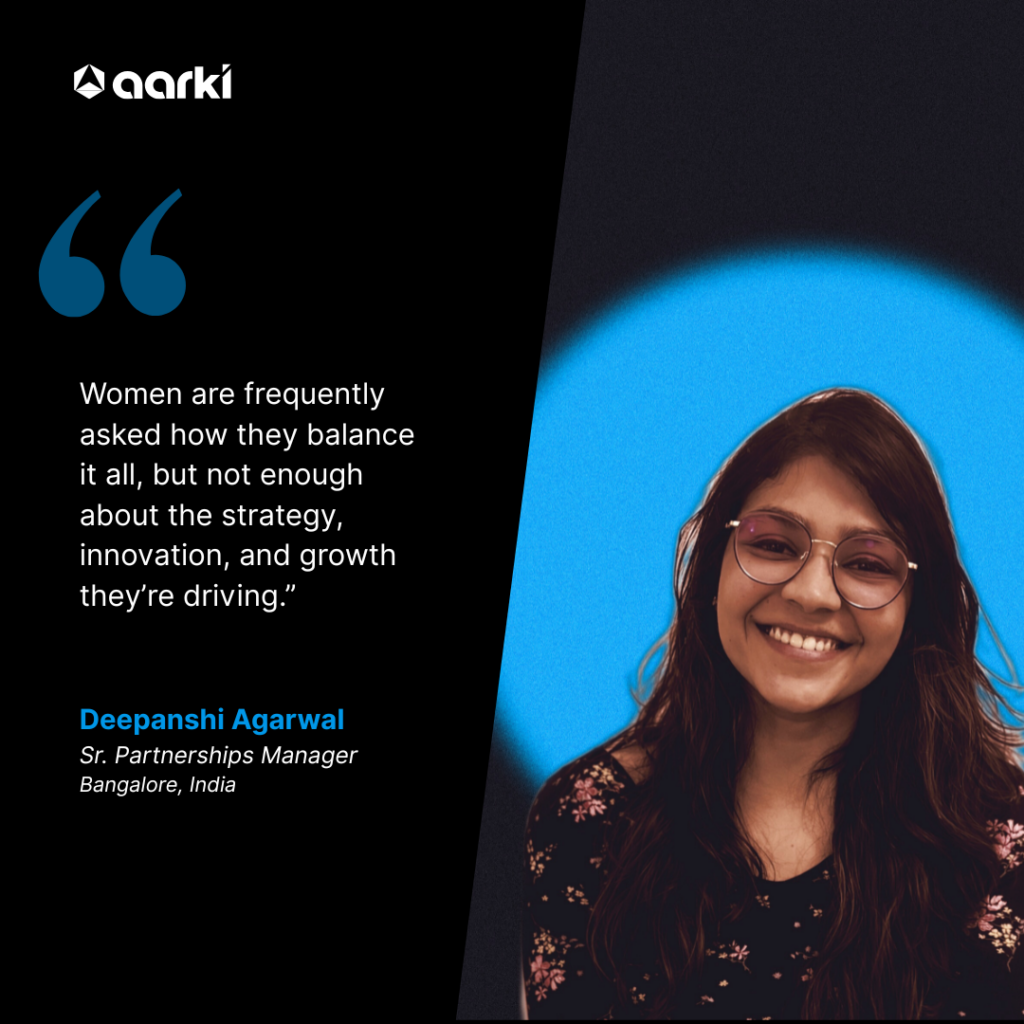
For those of us who work in growth, we know that the work necessitates what Deepanshi Agarwal, Aarki’s Senior Partnerships Manager, describes as “storytelling with data.”
So, we’re doing just that.
These are not “women’s leadership rules,” they’re just good leadership rules.
Rule #1: Visibility Is a Self-Promotion Leadership Skill
The advice almost every woman in our survey received early in her career? Keep your head down. Let your work speak for itself.
We’re sure to some, it’s well-meaning advice. It’s also, as our leaders have collectively concluded, incomplete.
Let’s look at the data.
McKinsey’s Women in the Workplace 2025 report — drawing on data from 124 organizations representing roughly 3 million employees — found that 84% of senior-level women want to advance, yet are offered far fewer opportunities to rise than men.
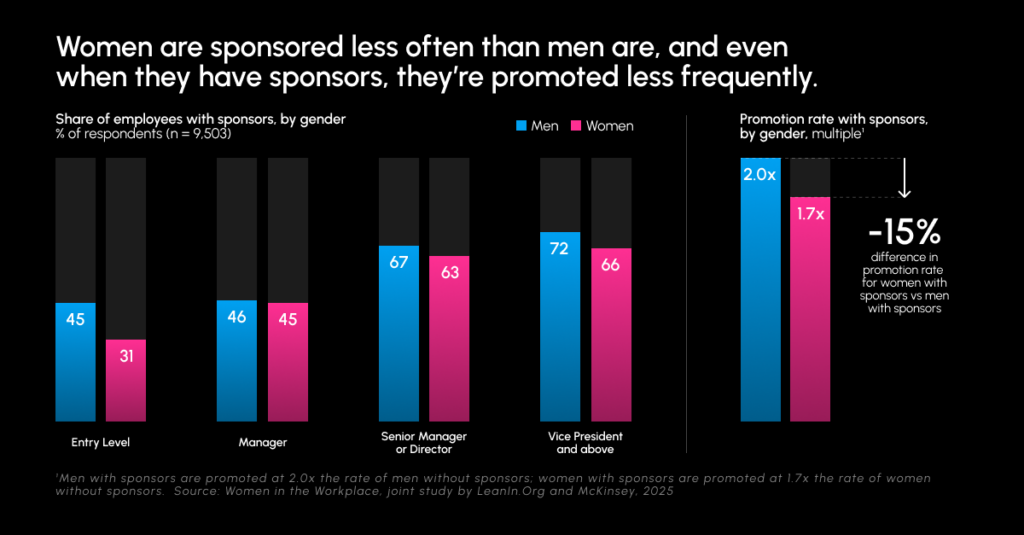
Source: McKinsey Women in the Workplace 2025
If a majority of women leaders want to be promoted, then why do they so often end up getting left behind? Beyond factors that can’t be controlled for, like gender discrimination and workplace bias, many women are often advised to speak up less.
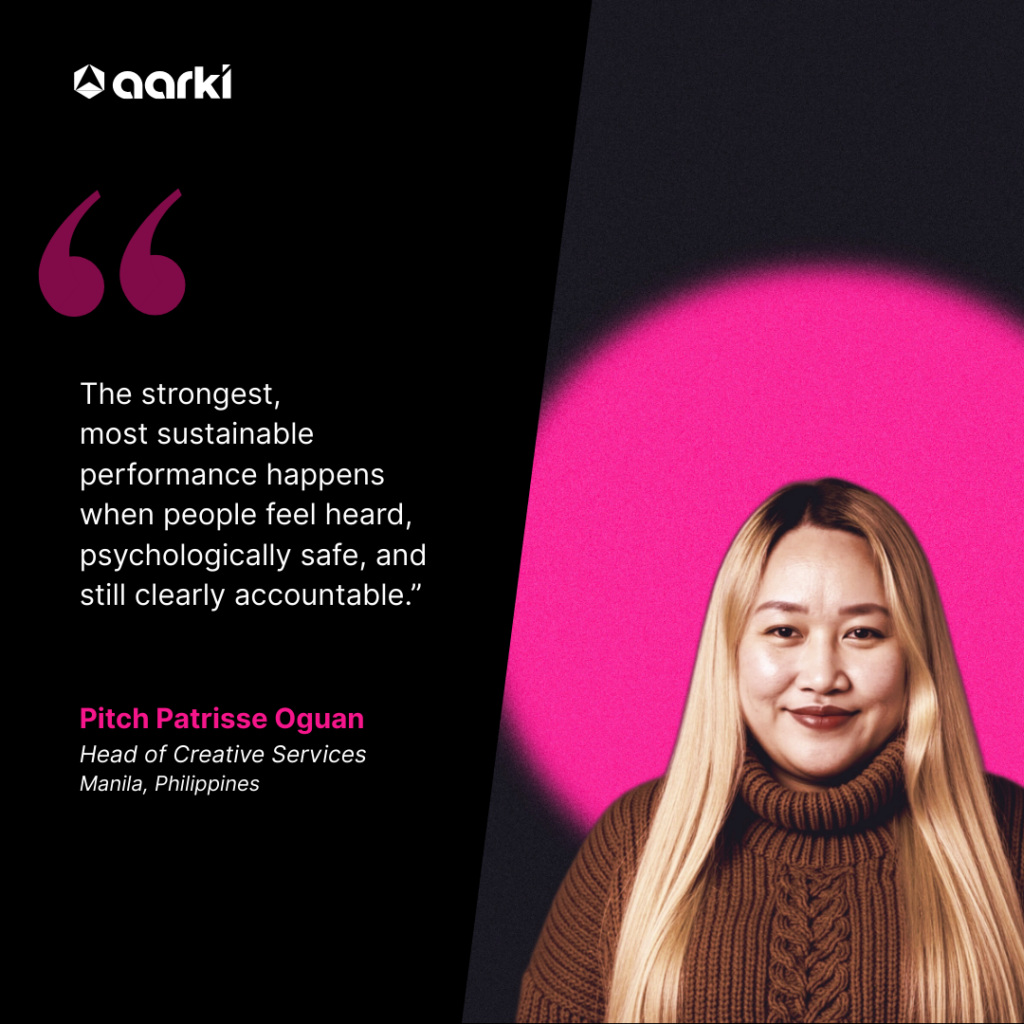
Pitch Patrisse Oguan, Aarki’s Head of Creative Services in Manila, learned early in her career what happens when the advice to “keep your head down and let your work speak for itself” goes unchallenged. “Work doesn’t speak for itself unless someone clearly connects it to business impact,” she says. “Today, I encourage my team to do excellent work and advocate for it confidently. Quiet excellence is admirable, but visible impact is what actually drives growth.”
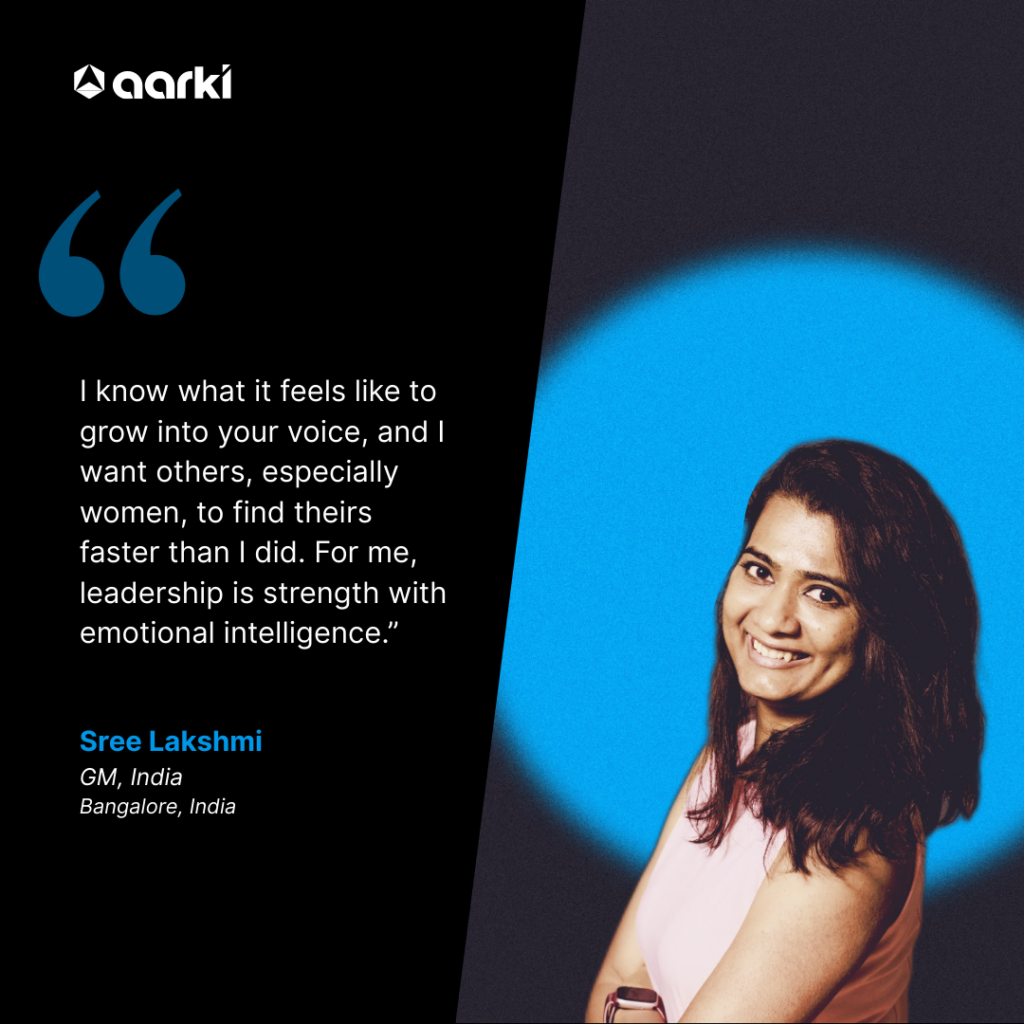
The refrain echoed across our global offices. Sree Lakshmi, Aarki’s General Manager of India, puts it with characteristic directness: “Hard work is important but visibility, voice, and conviction matter just as equally. Leadership isn’t silent excellence. It’s aligned excellence.”
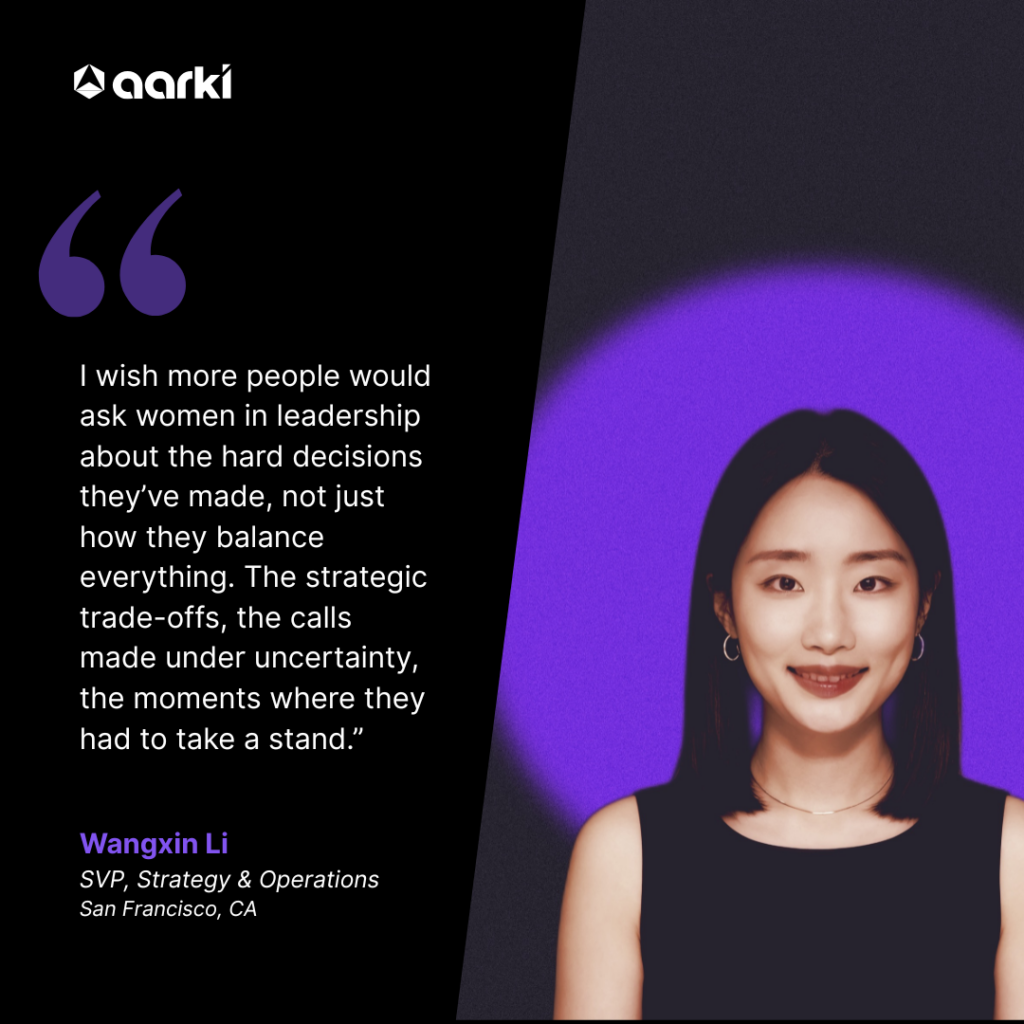
Wangxin Li, Aarki’s SVP of Strategy & Operations in San Francisco, frames it as a structural imperative: “impact requires visibility and initiative. You have to communicate clearly, align stakeholders, and sometimes advocate for the change you believe in.”
Deepanshi Agarwal, speaks from personal experience: “Early on, I believed hard work alone would lead to recognition. Over time, I’ve realised that while effort matters, visibility does too. Sharing ideas, asking questions, and owning your perspective are what truly create impact.”
What these leaders are describing is the ability to translate your output into organizational impact. Not just producing the work, but explaining what it means and connecting the dots for other people to understand the “why.” That’s a leadership skill and it’s absolutely learnable.
What it looks like in practice:
- Communicating the business impact of your work
- Aligning stakeholders proactively, before decisions are made without you
- Building a team culture where the best thinking rises, not just the loudest voice
Rule #2: Emotional Intelligence Is a Side Quest Performance Metric
The qualities most often dismissed as “soft” are the ones driving hard results.
Did you know that U.S. companies in the top 25% for gender diversity are 27% more profitable than the national industry average (Harvard)? Or that companies with the greatest proportion of women on their executive committees earn a 47% higher rate of return than companies with no women executives (Harvard)? The reason why is because adding women to a room increases certain leadership behaviors like psychological safety, collaborative decision-making, and emotional intelligence. These are organizational practices that drive earnings.
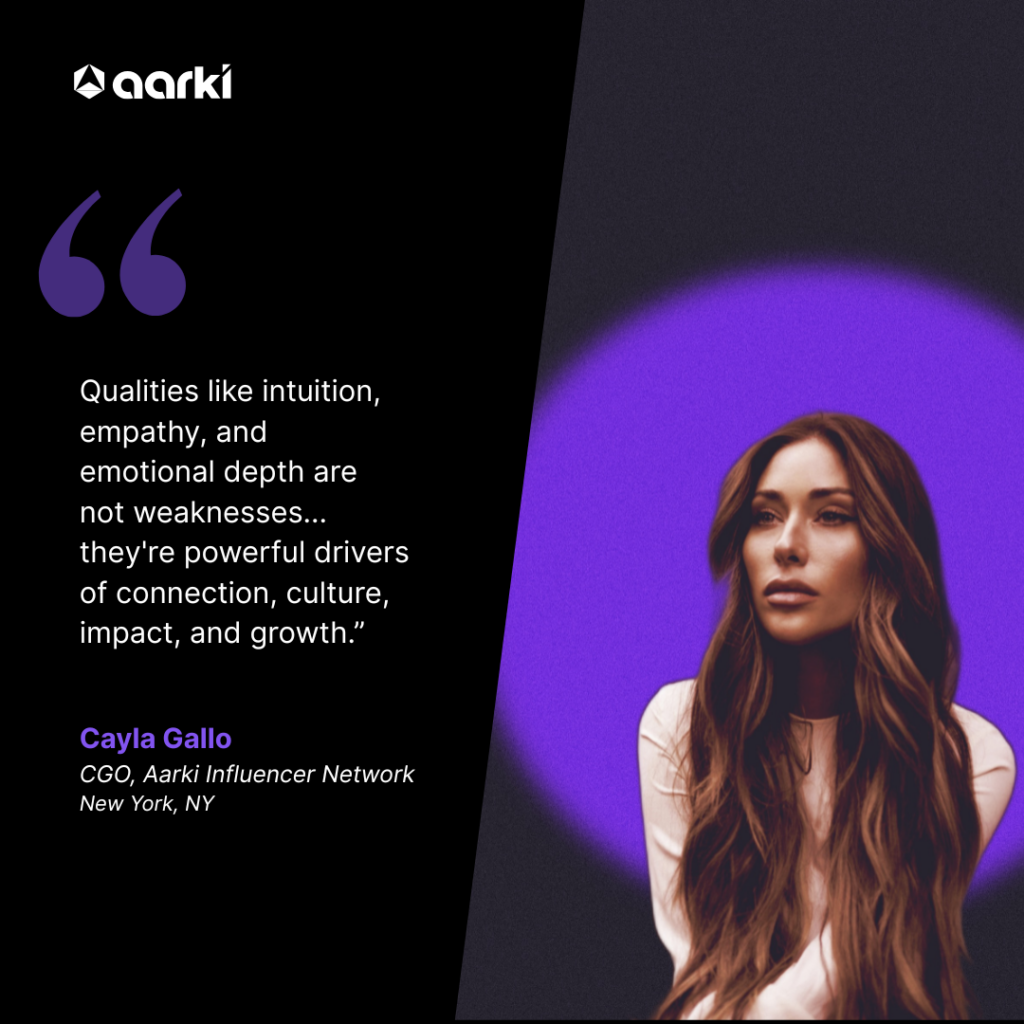
Cayla Gallo, CGO of Aarki’s Influencer Network in New York, is unambiguous about what has given her a professional edge. “My empathy and vulnerability have given me a perspective that isn’t always prioritized in business,” she says. “But it has allowed me to better understand people, build trust, and lead more effectively. This has been a core pillar of my success.”
Pitch Patrisse describes this in operational terms. “In fast-paced environments like adtech, the default is pure output mode. Over the years, I’ve learned that the strongest, most sustainable performance happens when people feel heard, psychologically safe, and still clearly accountable.”
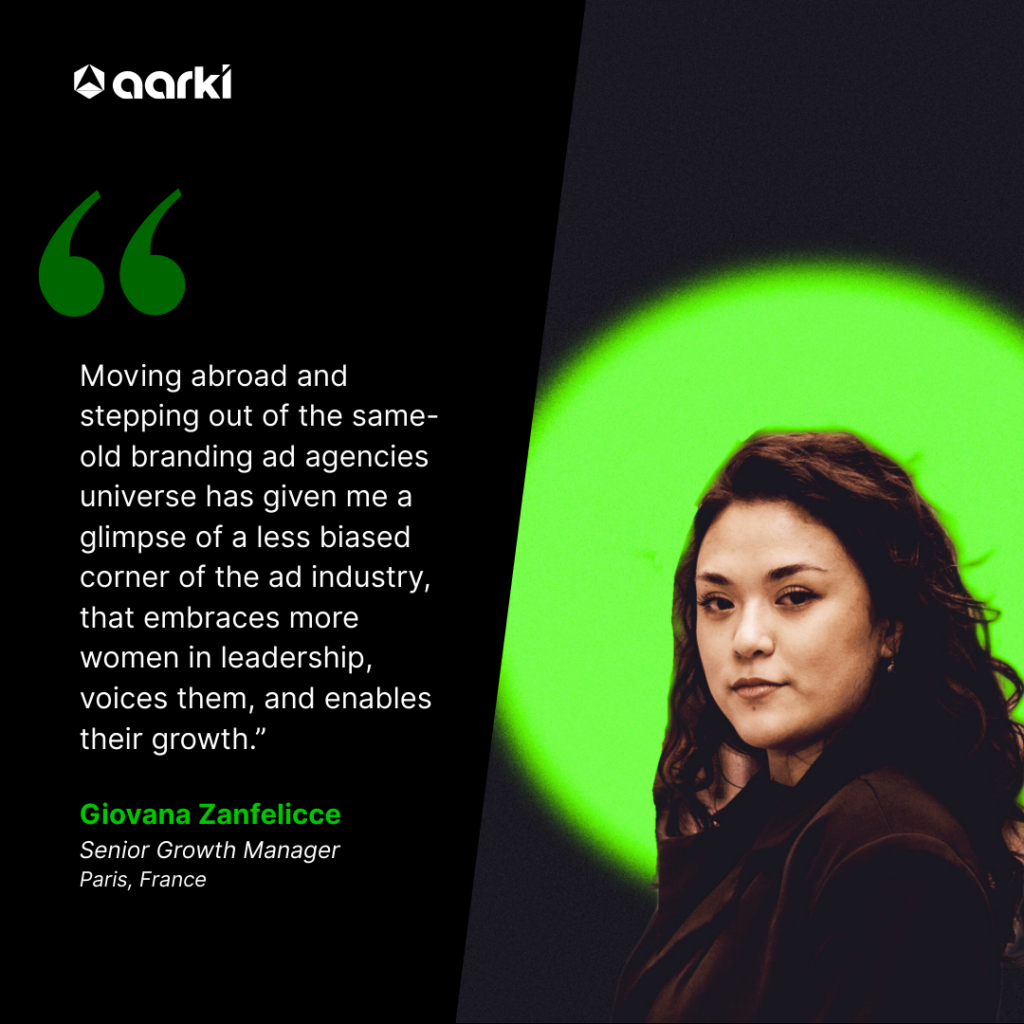
Giovana Zanfelicce, Aarki’s Senior Growth Manager in Paris, points to something harder to quantify but just as real: the social intelligence developed by navigating environments built around different defaults. “That gives us an extra superpower,” she says, “a heightened level of communication that allows us to put our thoughts out there with less friction from bias.”
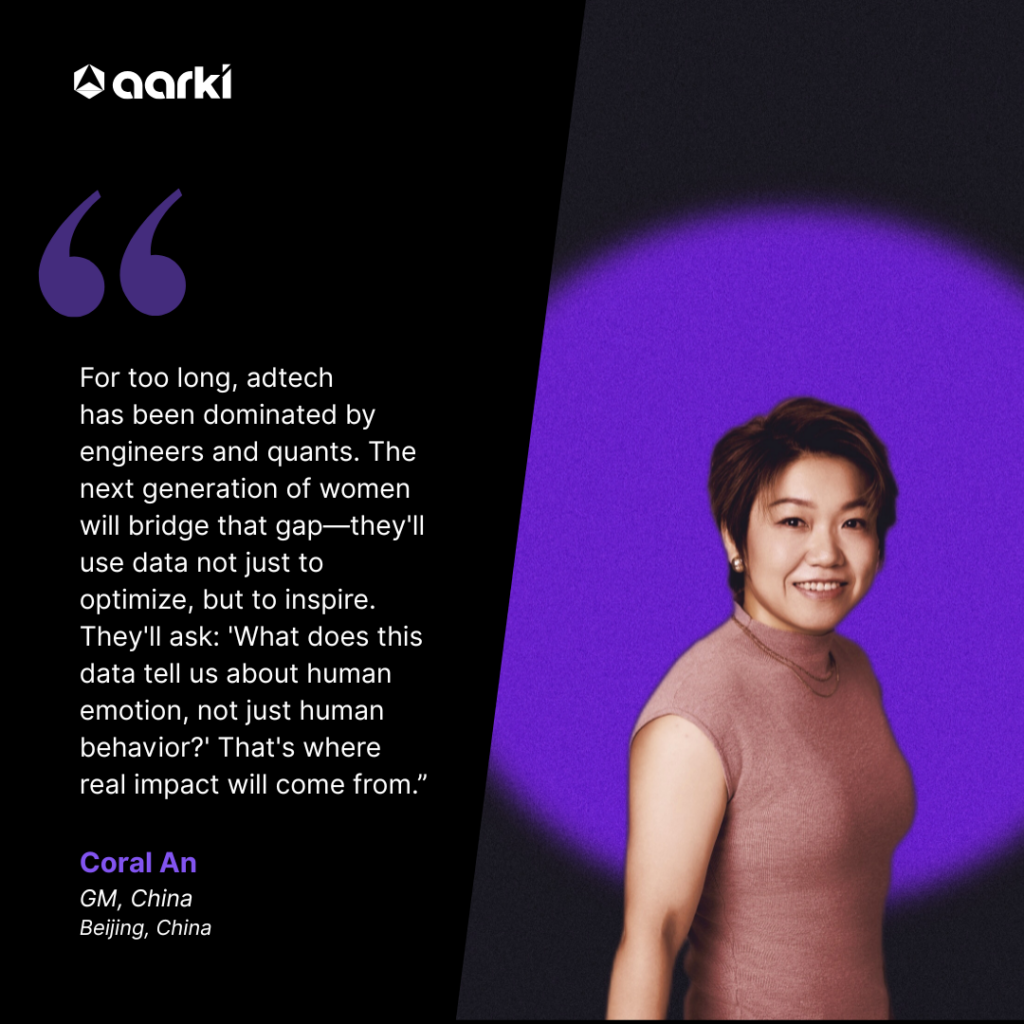
As Coral An, Aarki’s General Manager of China based in Beijing, summarizes in three words that we should probably put on our merch: “Gentle but strong.”
The data agrees. Companies with the highest proportion of gender diversity and “gentle but strong” leadership are more profitable. Which is also to say: emotional intelligence is not a side quest, it’s a leadership strategy that compounds impact.
Rule #3: You Grow Into the Room And Then Before You’re Invited
Growth is a decision.
There is a persistent structural barrier in the industry that sits at the first step of the leadership ladder. McKinsey’s Women in the Workplace 2025 report found that only 93 women are promoted to manager for every 100 men. For women of color, that number drops to 74. This bottleneck at the first management level has a cascading effect on every pipeline above it.
The structural barriers are real. But the leaders we spoke with also made a parallel point: waiting until you feel fully ready is its own kind of trap.
Sree Lakshmi says it simply: “You don’t wake up feeling ready for the big room, the big title, or the big responsibility. You grow into it by stepping into spaces slightly before you feel fully prepared. Most growth happens in that uncomfortable gap.”
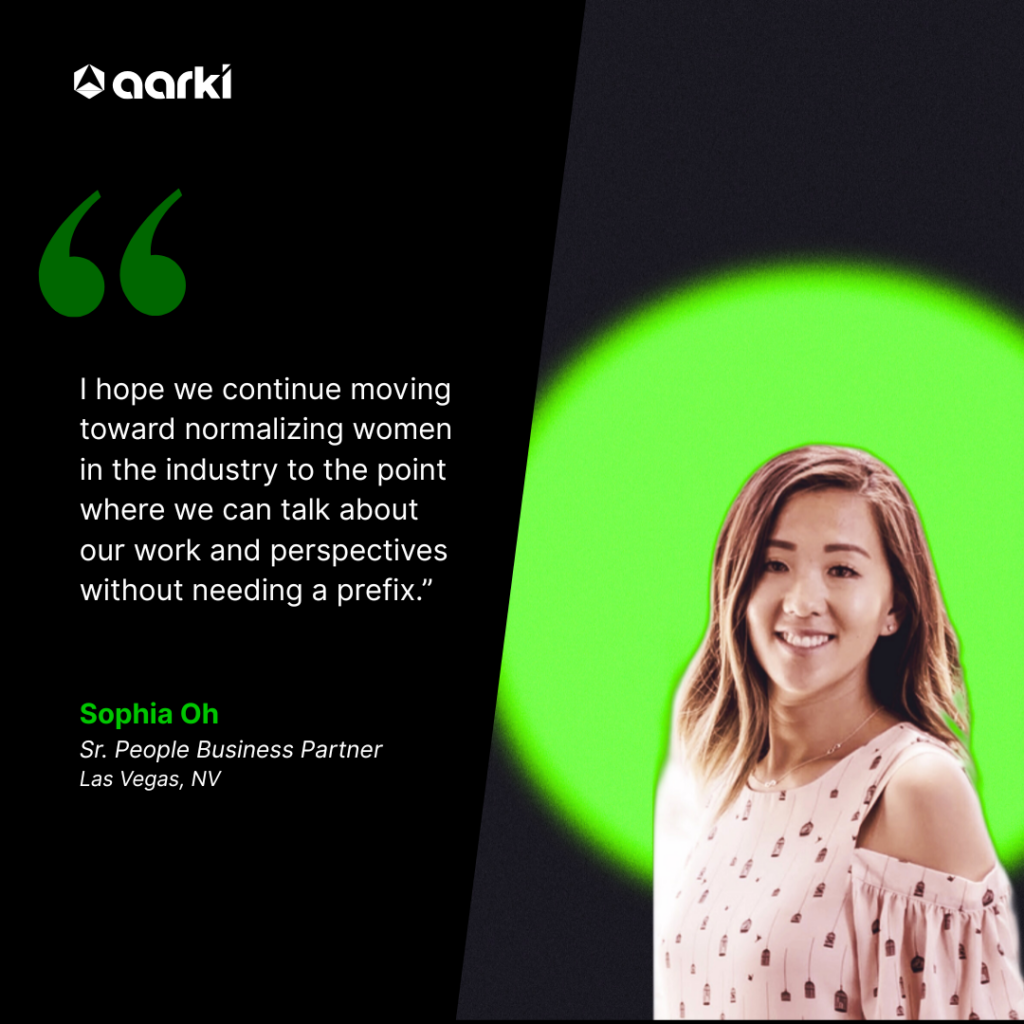
Sophia Oh, Aarki’s Senior People Business Partner, spent years watching this dynamic from the inside of organizations and living it herself. “Self-trust is built, not given,” she says. “real confidence is being okay saying, ‘I don’t know yet.’ It’s being honest about what you don’t have figured out, but trusting yourself enough to go find the answer.”

Kris Jiyeon White, Aarki’s Manager of Growth in Seoul, is five years into a career shaped by exactly these moments. “Some of the biggest turning points came from taking calculated risks. Stepping into bigger roles before I felt fully ready, managing larger budgets, entering new markets, building a new team. If I had stayed where it felt comfortable, I wouldn’t be where I am today.”

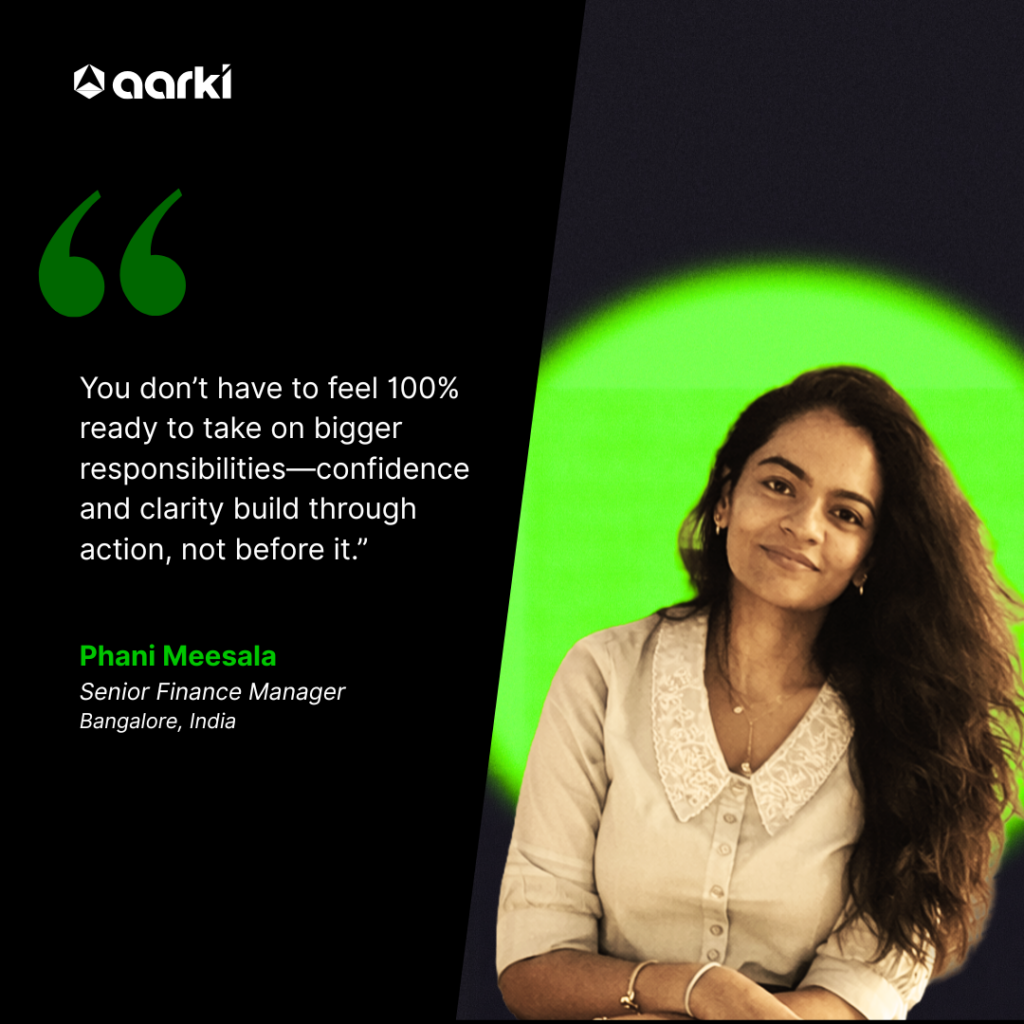
Phani Meesala, Aarki’s Senior Finance Manager in Bangalore, moved from Amazon to Aarki during its turnaround phase, a calculated risk that looked uncertain from the outside. Her conclusion: “Confidence and clarity build through action, not before it.”
Letty Wang, Aarki’s Head of Sales in China, distills the same philosophy: “One failure is never the end of the world.” It’s a simple observation, but it unlocks an important understanding: you can’t step into the bigger role if you’re not willing to occasionally trip on the way in.
The throughline across all of these perspectives? The gap between where you are and where you’re going is also where the work happens.
Rule #4: Your Life Outside Work Distracts From Is What Makes You Good at Your Job
Which is also to say: the leaders who perform best have a life outside of work.
This was perhaps the most unexpected pattern across our surveys. When we asked what makes these leaders sharper at work, the answers weren’t about productivity systems or leadership frameworks. They were about boxing. Yoga. Fur babies. Running. And, overwhelmingly — parenthood.
There’s a data point here that the industry rarely frames this way. According to La Fosse’s 2025 Women at Work Blueprint Report, half of women leave the tech sector by the age of 35. The conventional read on that number focuses on what’s pushing women out: lack of advancement, burnout, and the inability to balance having a family with work. But there’s another question embedded in it. What keeps the women who stay? The leaders in this survey offer a consistent answer: it’s not compartmentalization. It’s integration. The ability to let a full life inform the work, rather than hiding it out of the frame of a Google Meet screen.
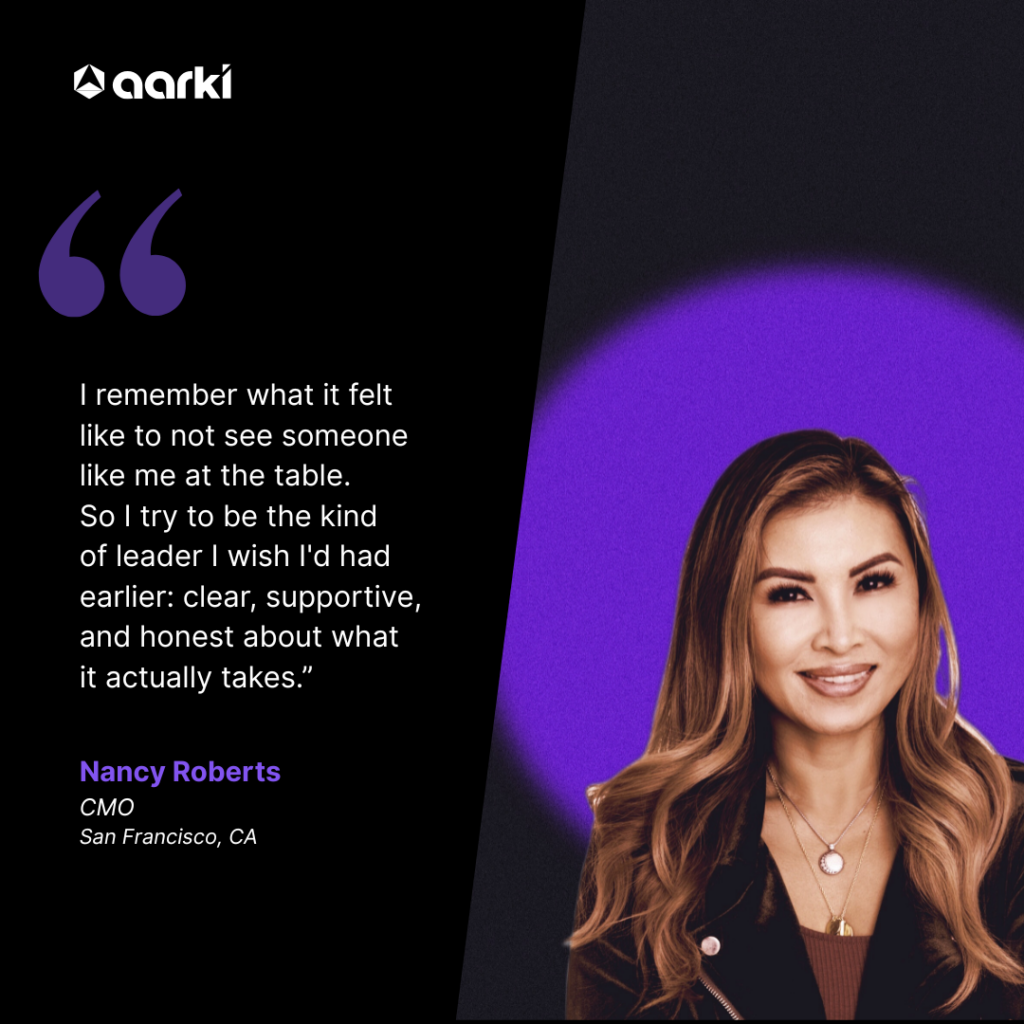
Nancy Roberts, Aarki’s CMO in San Francisco, doesn’t mince words when she says her kids make her sharper at her job. “Being a mother of two boys teaches you to communicate with radical clarity, pivot when something isn’t working, and find your patience when you’ve already used up all of it… You stop agonizing over the small stuff because you’ve already been fully humbled by someone who won’t eat dinner because his sandwich was cut into rectangles instead of triangles.”
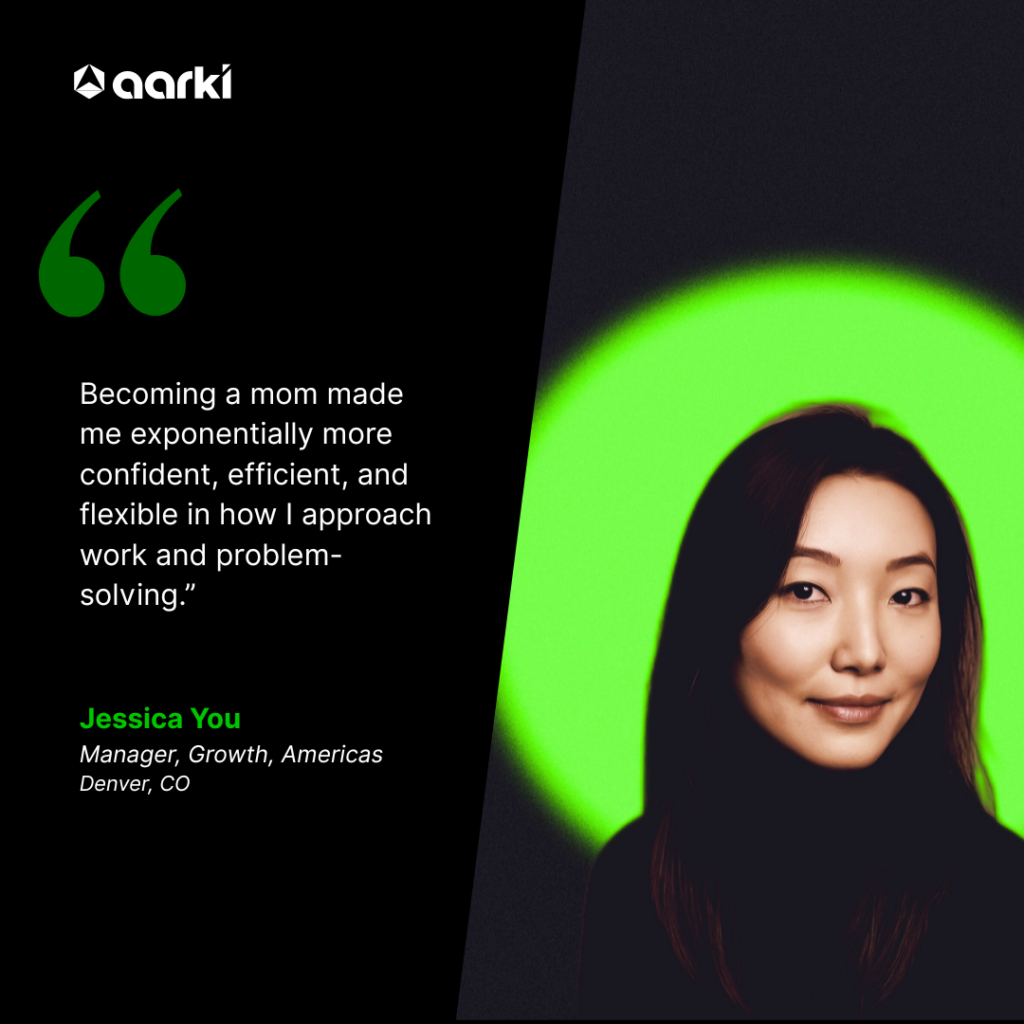
Kris Jiyeon White, raising her one-year-old son in Seoul, describes the same shift in performance terms. “When your time is limited and your energy is finite, you become very clear on what truly matters. I focus on the 20% that drives 80% of the outcome…becoming a mom definitely didn’t slow me down, it sharpened my focus.” Jessica You, Aarki’s Manager of Growth for the Americas who’s based in Denver, echoed her own experience: “Becoming a mom made me exponentially more confident, efficient, and flexible.”
Outside of parenthood, the same principle holds. Coral An finds her clarity in boxing: “It teaches you to stay calm under pressure and think strategically when things get chaotic.” Cayla Gallo credits yoga for helping her “regulate my thoughts, stay grounded, and respond with intention rather than reaction.” Pitch Patrisse draws from fitness, art and crafts, and caring for her dogs as three different resets that, together, cultivate the mindset that leadership in a high-velocity environment demands.
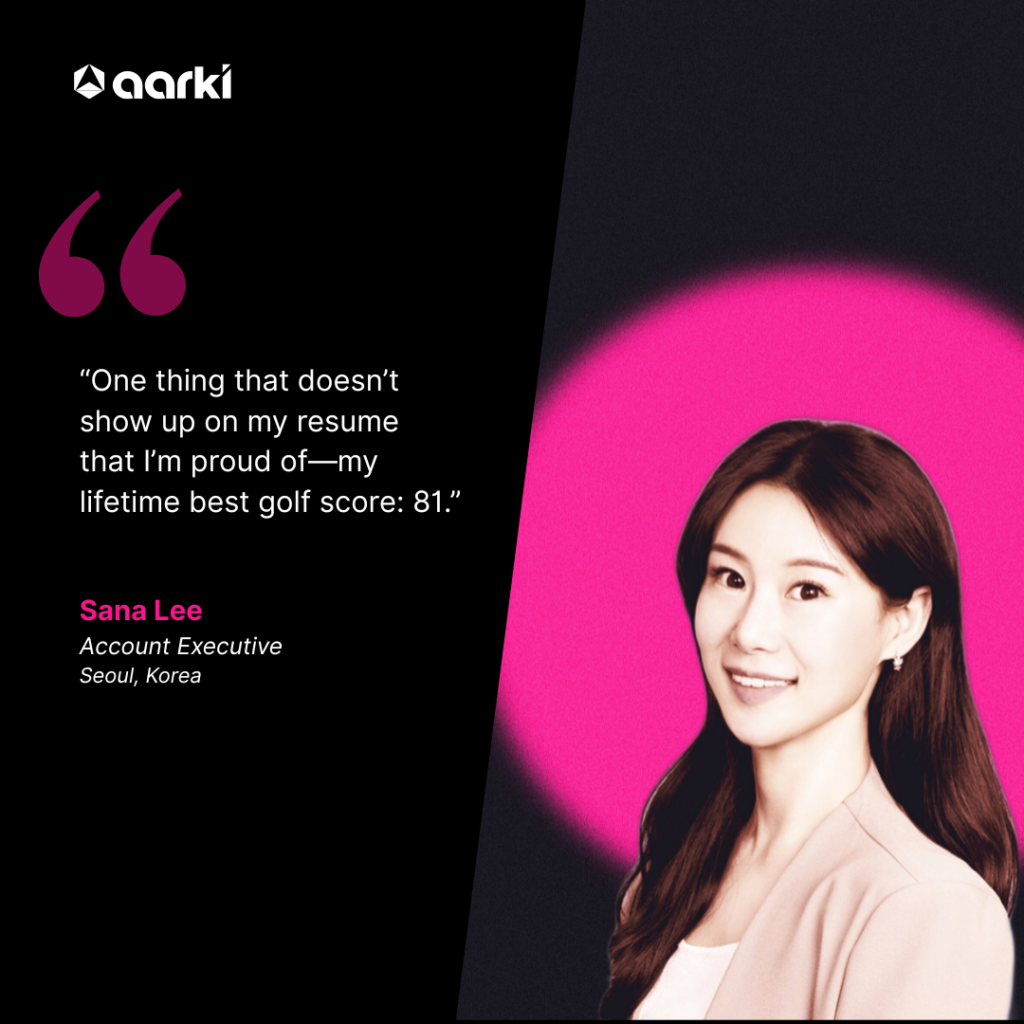
Sana Lee, Aarki’s Account Executive in Seoul, notes her pride at her golf game. Her personal best score? 81. The point isn’t the score —which is impressive— it’s that sharpening yourself outside of work, in whatever form that takes, is part of the job.
Rule #5: The Best Leaders Hold Their Seat Build the Room They Wished Existed
Leaders expand the table.
Here’s a sobering data point: McKinsey’s Women in the Workplace 2025 found that only about half of surveyed companies say women’s career advancement is a priority — down from previous years. One in six has cut diversity and inclusion staff or resources. Formal sponsorship programs, allyship training, and targeted career development have all seen cuts at a significant portion of organizations.
In that context, what the women in this survey are doing takes on an additional dimension. They’re not just leading their functions, they’re actively filling the structural gap that organizations are leaving behind.
Early in her career, Sophia Oh was labeled a “firecracker” for advocating ideas in rooms that weren’t built with her in mind. She reframed what the label meant to her eventually, but what stayed with her is the cost of the effort it required. “I try to create space so others don’t have to push as hard as I did just to be heard,” she says.
For Wangxin Li, the work that has mattered most to her doesn’t show up on her resume. “Mentoring team members who later became leaders themselves. Seeing someone go from uncertain to confident. Helping someone navigate a difficult career decision.”
For Nancy Roberts this type of mentorship is personal. Earlier in her career, she spent five months concealing a pregnancy while being considered for a promotion she’d already earned on the metrics. “That experience radicalized me,” she says. “Not in a bitter way, but in a ‘I will never let someone on my team feel like they have to hide who they are to be considered worthy’ way.” She continues, “I try to be the kind of leader I wish I’d had earlier: clear, supportive, and honest about what it actually takes.”
In many ways, Sree Lakshmi speaks for most of the group when she says, “I know what it feels like to grow into your voice. And I want others — especially women — to find theirs faster than I did.”
So What is the Data Saying?
The data is saying that these five rules shouldn’t need a gender qualifier. Leading with visibility, emotional intelligence, intentional risk-taking, whole-person performance, and space-making — this is just good leadership.
The fact that these qualities are disproportionately associated with women isn’t because women have a monopoly on them. It’s because women have had more practice navigating environments that didn’t assume their presence; which builds a kind of precision and intentionality that the industry should be paying close attention to.We’ll give the last word to Letty Wang. When asked what question she wished more people would ask women in leadership, her response was simple: “Same question as for men.”
 EN
EN  KO
KO  ZH
ZH